 Get
Get 
 We deliver

The butchers block – Choosing and getting the best from each cut of meat
Pairing the right cut of meat with the right recipe is key. With the wrong cut in the wrong recipe, the meat will always be tough, either through under or over cooking. A good recipe is built around the star ingredient itself.
Fortunately, it is easy to establish which cut to use, and what alternatives you might be able to use instead for certain recipes, for perfect results every time.
In simple terms, the principle is that the muscles in the animal which work harder, so the legs and shoulders, will have much more connective tissue for strength, and stronger muscle fibres. The connective tissue, or collagen, takes a long time to break down, to form the gelatinous sauce around the meat in these hard working cuts. A slow cook at a low temperature allows these tissues to break down, whilst not overheating the meat, and preserving moisture is key.
Meanwhile, the muscles which don’t work as hard in the animal, such as the loin alongside the backbone, and the rump for example, are much more delicate in comparison, with very little collagen or sinew. High heat develops flavour. This meat benefits from fast cooking, as there is very little fat and moisture, which means it would dry out quickly if cooked for a long time. This is of course the classic steak, and those cuts such as topside or rib which benefit form quick hot roasting and are served rare.
Aging is a key factor too. Over time, the enzymes within the meat begin to break down the tougher fibres, making the meat you use so much more tender. All Dorset Meat Company cuts are aged appropriately, which makes a huge difference to the quality of the meat.
Here are a few of our favourite cuts at the Dorset Meat Company, with explanations of where they are best used, listed in from slower to longer cooking times. Steaks are so numerous they deserve their own article for how to choose the perfect steak! (LINK)
Ox cheek
The cheek is one of the hardest working muscles there is, and whilst it doesn’t support weight, it is in constant use as the animal chews the grass. The ratio of collagen to meat is perhaps highest in this cut, meaning that it can be rather hard to cut through when raw. However, with long slow cooking the is collagen breaks down to give a beautifully unctuous gelatinous base to a sauce, packed with flavour. The cheek can be served whole, and will effortlessly break apart on the plate.

Oxtail
Oxtail has a distinct flavour, with short muscles which connect the vertebrae of the tail. As it is cooked on the bone, there is plenty of additional flavour too. Oxtail is beautiful braised long and slow with shallots, and red wine.

Brisket
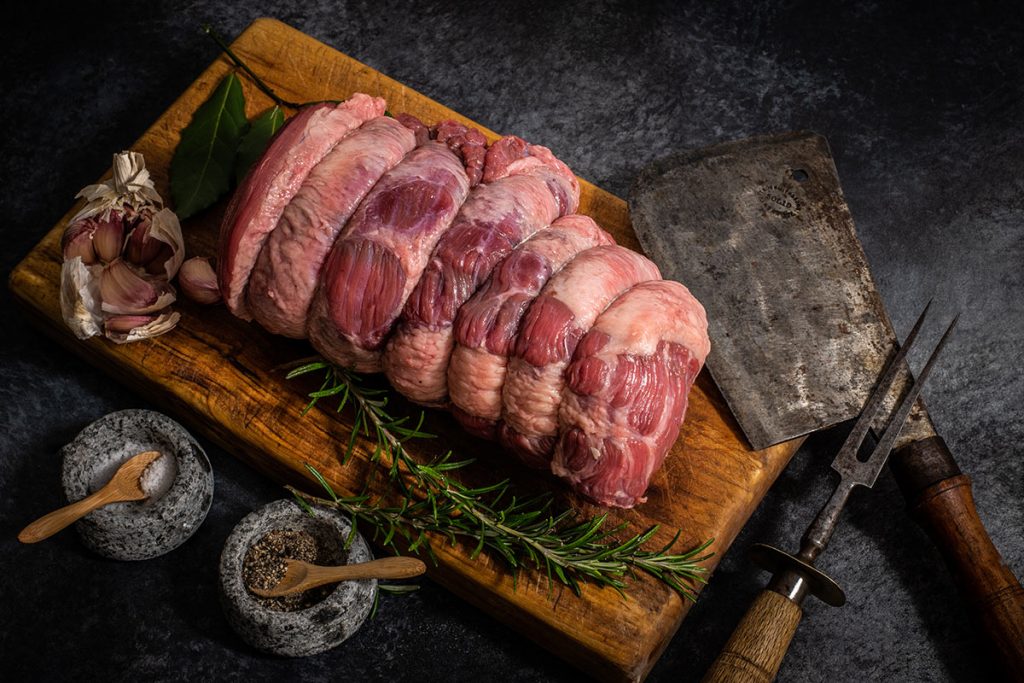
Cut from the chest between the shoulders, then rolled, brisket is a hard working part of the cow, with really good marbling for flavour. With a lot of connective tissue, it really needs a long slow cook, the long and slower the better, for melt in the mouth tender beef. It is traditionally pot roasted, or slow cooked in a barbeque for up to 12 hours.
Braising steak
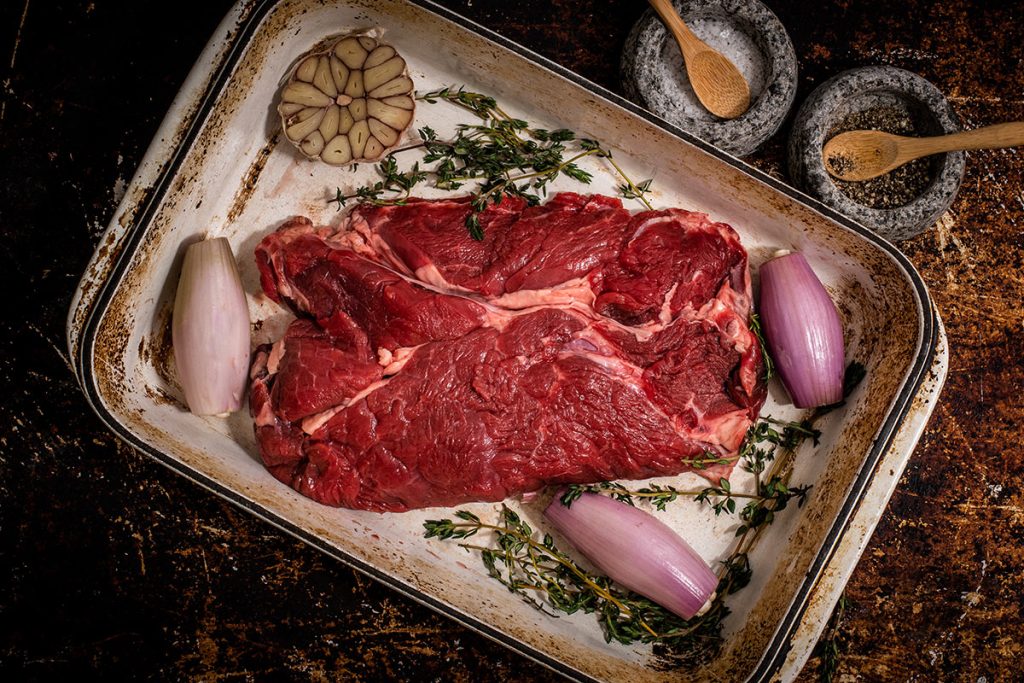
Also known as Chuck steak, this cut is from around the shoulders. With lots of connective tissues it needs a good slow cook.
Shin
With plenty of connective tissue, shin is perfect for a classic stew. With it’s unique structure cut across the groups of leg muscle, the meat naturally breaks down in to chunks during cooking, and this gives a really good indicator of when the meat is done, when the collagen breaks up and the meat separates naturally.
Beef Cobbler with cheesy herby scones

Short ribs
Cut from the intercostal muscles at the end of the ribs, these are the hard working muscles responsible for breathing, and they also benefit from a long slow cook. They are well attached to the bone, which falls away during cooking, and the presence of the bone also has the benefit of adding additional flavour too. Perfect for sticky ribs, oriental ribs, or the classic French Pot-au-feu. Although a close cut to the rib of beef or forerib, the muscle type is very different, so they require very different cooking techniques.

Silverside
So called due to the layer of silvering over the top (which is effectively connective tissue), the Silverside is cut from the just above the leg. Like Sirloin, it also benefits from fast cooking, to be served rare or pink.

Topside
Just above Silverside on the leg, effectively the top rear corner of the cow, Topside is an extremely lean roasting joint.

Roasting Sirloin
Effectively a stack of sirloin steaks in one roasting joint, this cut is perfect for hot roasting, cooked just to the point where it can be served rare in the middle. The fat layer on the outside provides protection from the heat, and allows steady transfer through the joint.

Rib
One of the finest cuts, The forerib has plenty of marbling for superb flavour. A good Rib of beef will have been impeccably aged so that some of the connective tissues have already begun to have been broken down by enzymes, so the cooking completes the process. A hot roast to crisp up the outside, with perfectly rare succulent meat inside, the rib takes some beating.

Fillet
The fillet is the leanest part of the animal, running alongside the backbone. It is a muscle which doesn’t work hard, so has very little fat, or connective tissue. This means it is meltingly tender, and benefits from quick cooking, either as fillet steaks, or gently wrapped in a delicious and protective layer of pastry in a Beef Wellington.

Chateaubriand
Cut from the centre of the tenderloin, Chateaubriand is exceptionally lean. This cut is normally served whole, to then become a sharing dish of sliced steak effectively, served with a red wine ‘Chateaubriand’ sauce. Historically, the name comes from the chef who first created it, with a technique of wrapping the joint in cheaper steaks and roasting it, then discarding the outer pieces which would be tough, leaving perfectly evenly cooked steak in the middle. The modern version simply involves browning the meat well on the outside, before finishing in a hot oven, being served pink.

Order Meat Online – Free UK Delivery Available
Shop our range of high welfare 100% grass fed meat boxes and free range poultry. Get 10% off your first order with discount code ‘welcome10‘