 Get
Get 
 We deliver


How to choose the perfect steak
A perfect steak is one of life’s greatest treats and pleasures, but only if the best sourced meat is perfectly cooked. Times have moved on from the days when choosing a steak meant plumping for a Sirloin, or perhaps Rump if on a bit more of a budget. Now there are a multitude of cuts which were always available, but have now reached the limelight with good reason. So which should you go for?
Core principles
The absolutely fundamental thing you can do first, is to ensure you buy well. However well marketed, a supermarket packaged Sirloin is never going to taste as good as one which has been properly sourced, like those form the Dorset Meat Comapny. There are 3 key considerations which will have a huge influence on how good your steak is, before it even hits the pan.
Grass fed is best!
Meat that has been reared on grass will have matured much better over time, and have a much richer, and fuller flavour as a result. A quality diet, and more time for the meat to mature will contribute so much more to the flavour than meat that has been reared quickly on processed food. Grass fed beef also benefits from higher proportions of Omega 3 and vitamins and minerals, for the simple reason they are eating wild grasses, flowers and legumes, as opposed to intensively fertilised or grass treated with pesticides. Grass fed beef has a much deeper red colour, and an orange colour to the fat, which is created by the beta-carotene in the diet, and a sign of the presence of the antioxidant Vitamin A. All of the Dorset Meat Company beef is raised this way for this reason, along with the clear welfare benefits for the cattle too.
Choose well aged meat
The process of aging meat is an important one, often overlooked by supermarkets in the rush to cut down on processing time and costs, as meat being hung in storage costs time and money. As meat is hung, the enzymes present start to slowly break down the structure, which creates a much more tender texture, and enhances the beef flavour too. The meat is succulent without drips of blood, and with a deep dark red colour, and an unmistakeable aroma. The longer that meat is hung for, the more these attributes develop, which is why all Dorset Meat Company steaks are aged for at least 28 days in our dedicated drying room.
Quality butchery
Our Dorset Meat Company butcher is an expert in how to present a cut for the best cooking and eating, to ensure the fibres are aligned in the right direction, as well as trimming away tough silverside or fat.
Choosing a cut
Now you know who you should be sourcing your meat and why, time to choose the cut! There are many factors which will influence your choice, including cost, the intended dish and recipe, and also how lean the meat is too. The good news is, there really is a cut for everyone. Some of the cheaper cuts can easily taste as good as the more expensive ones, if treated with care. Fat content is important too, with good marbling; the tender fat which melts on cooking contributes much to the end flavour.
Here they are, in order of relative cost.
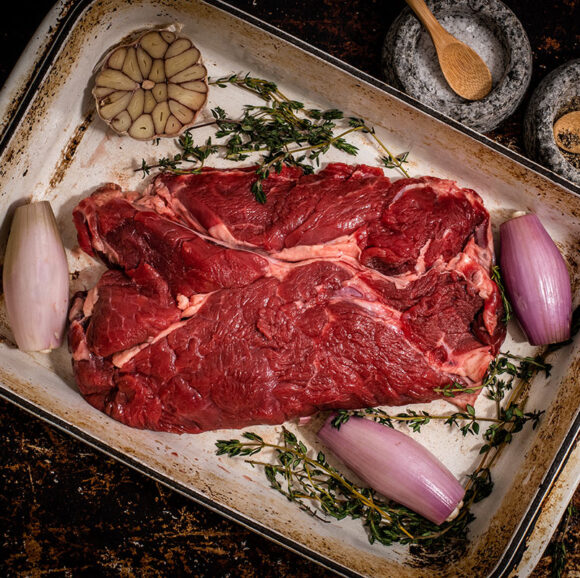
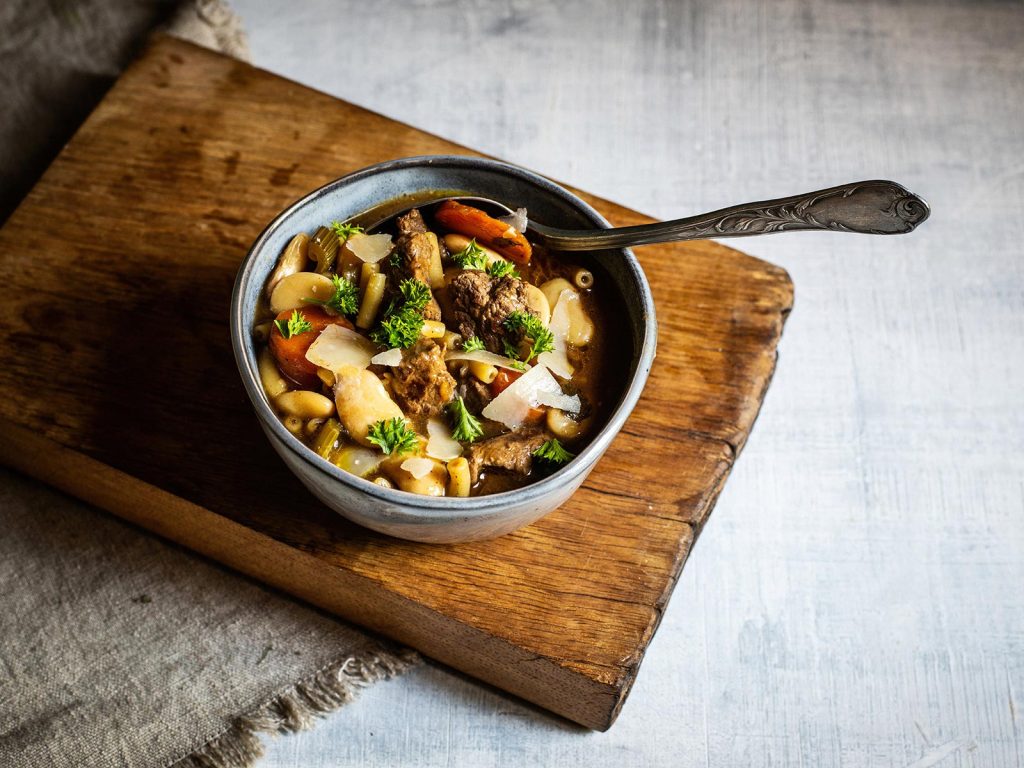
Braising steak (1)
Whilst not cooked in the same way as other steaks, braising steak is by far the cheapest, an certainly not lacking in flavour. This cut comes from the skirt, leg or flank, all hard working muscles which benefit from slow cooking to create beautiful tender steak.
Onglet Steak (2)
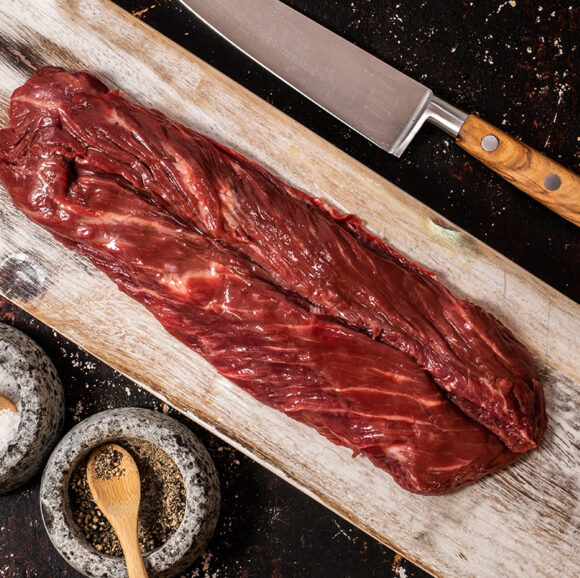
Onglet is a French word, often used to describe what is also known as hanger steak. A sadly often forgotten cut of beautifully marbled meat form the lower belly, it is presented and cooked as a fillet, and then sliced for serving, revealing beautiful pink meat inside with a lovely loose texture. Despite being the cheapest frying steak you can buy, the flavour is outstanding, and there is a reason it is also known as a “butcher’s steak”, as the one most likely served in the butcher’s own home, and they should know!
Minute Steak (2)
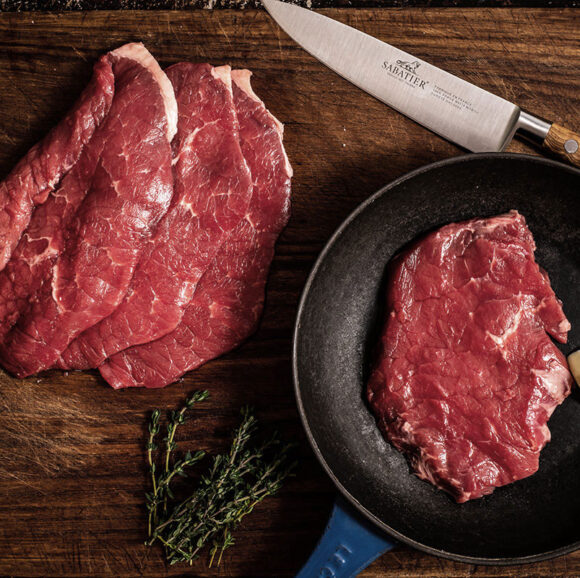
Minute is a reference to the cooking time, rather than the size, though they are thin! Cut from the sirloin between the rump and forerib, because they are thin they cook in very little time, keeping tenderness without losing moisture. Being perfectly trimmed, minute steak is one of the leaner cuts too, making it the healthier choice for stir fries, or that impromptu flash-fried steak sandwich.
Bavette Steak (2)
Like Onglet steak, Bavette is a cut from the flank of the cow, (from which it derives it’s French name) which has a loose texture and is big on flavour. This cut is often overlooked, which is a shame as it is outstanding. With thin intermuscular fat, bavette benefits form fast hot cooking, and good resting. Well-cooked and rested, this steak slices really well for the perfect sandwich.

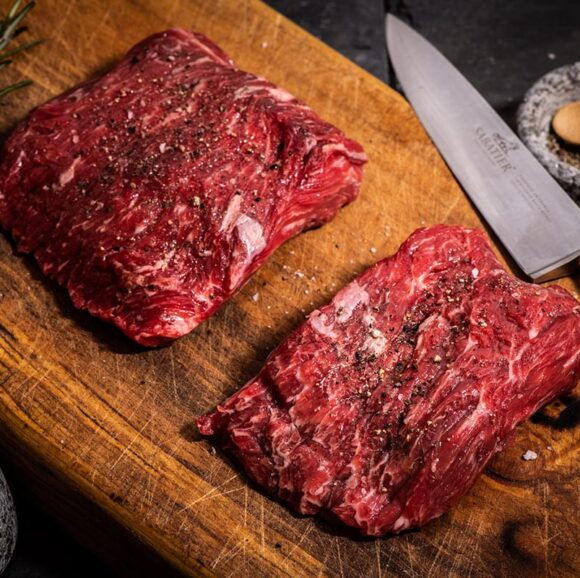
Featherblade Steak (2)
Taken from the shoulder, and with distinct feather shaped marbling (hence the name), the Featherblade is a thrifty steak packed with flavour. It is best served rare as it can tend to toughen quickly.
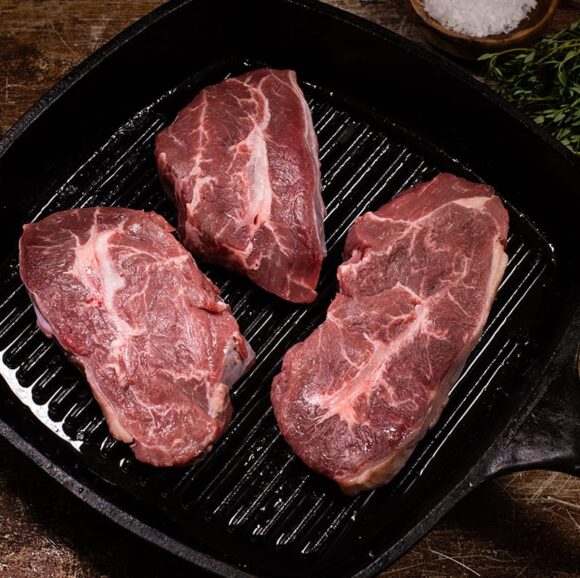
Flat iron Steak (2)
Cut from the shoulder, Flat iron is distinctive with it’s deep marbling, and we know marbling equals flavour. The name derives from the shape, which resembles and old fashioned clothes iron.
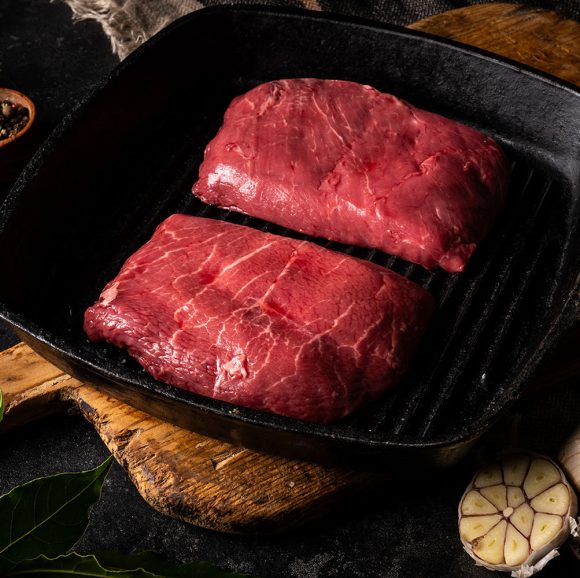
Ranch Steak (2)
The Ranch is cut from the topside, with and all excess fat removed to give a nice lean portion. Ranch needs quick hot cooking and resting, and benefits from scoring to prevent curling during cooking. Perfect if you are looking for a healthier lean steak, or a steak for marinating and stir frying. It is often tied with string to help maintain it’s shape during cooking.
Rump Steak (3)
A classic cut which perhaps needs no introduction, and well known as a cheaper alternative to Sirloin. Coming from the rump of the cow where the muscles work harder than the loin it tends to be not as tender as Sirloin, though it is reputed to have a much deeper flavour by high end chefs. To get the best of a rump steak, careful cooking is key. Why not try one of our sharing steaks for two?
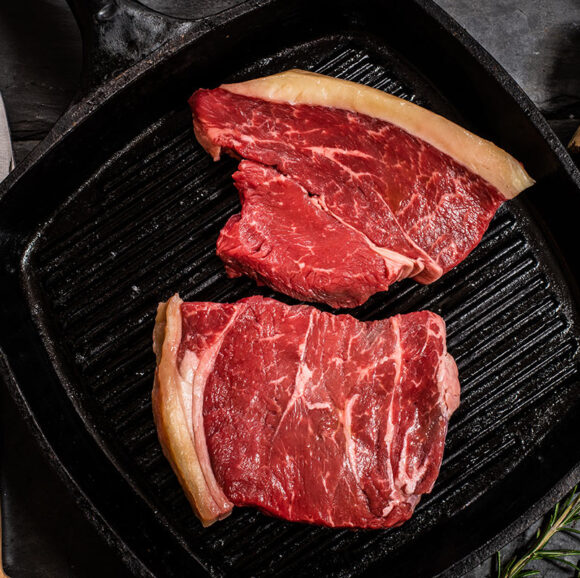
T bone Steak (3)
A steak which takes it’s name from the ‘T’ shape of the bone, which is cut from the vertebrae and incorporates the short loin meat below. Steaks cooked on the bone often incorporate more flavour.
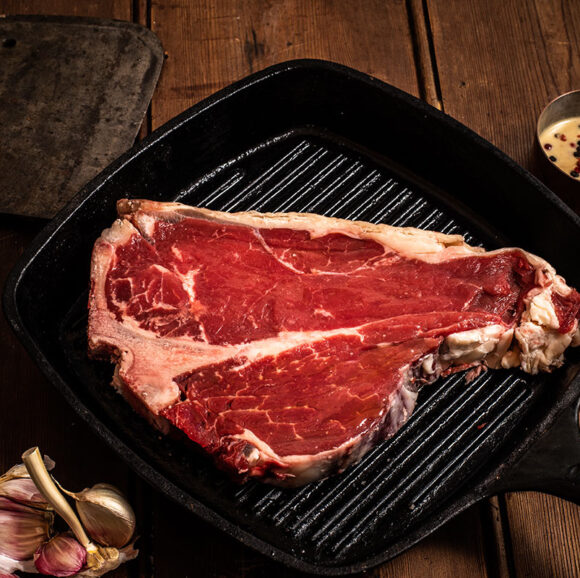
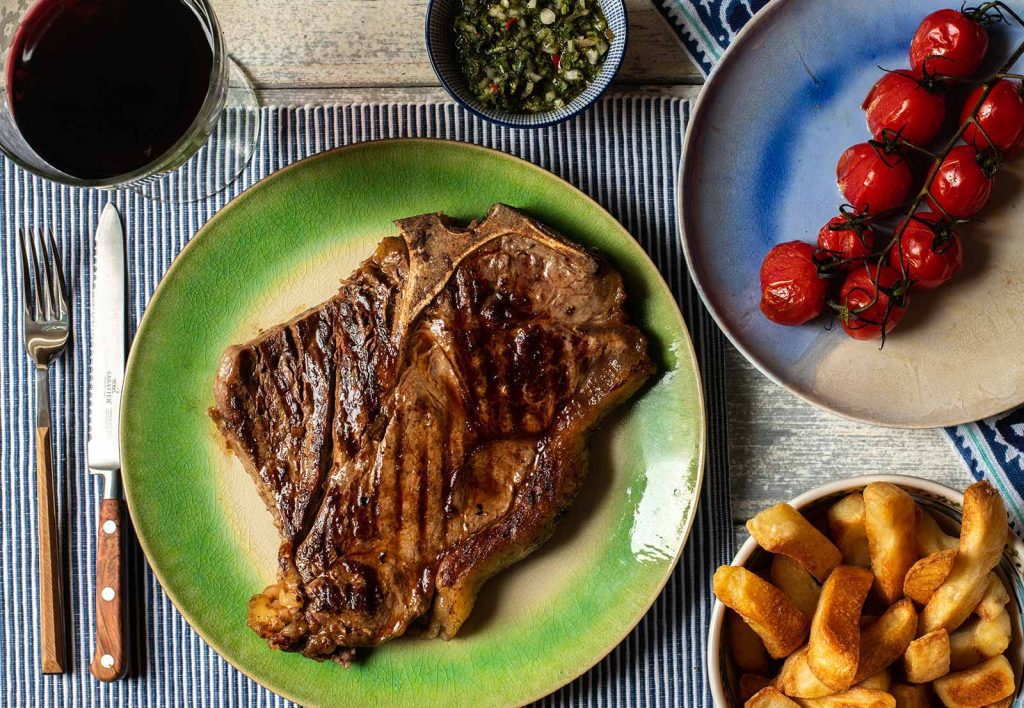
Porterhouse Steak (3)
Like it’s slightly cheaper cousin the T-bone, the Porterhouse is cut from the vertebrae of the cow, but slightly further back to incorporate more tenderloin, for a slightly more tender steak. As the cow is wider at this point, the steak is larger than the T-bone, which is the essential difference. The name reputedly comes from the first steak house in which it was served, and remains immensely popular in America. The perfect steak for sharing.
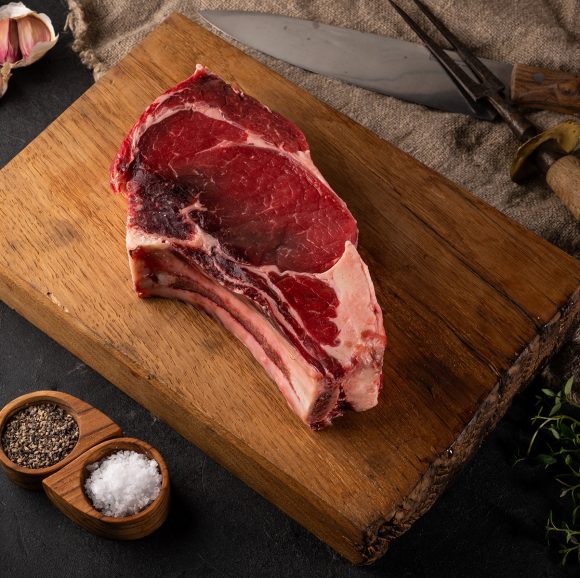
Cote de Bouef (4)
As steak goes, nothing quite matches a Cote De Bouef! This beautifully marbled cut comes from the fore rib, and includes the bone for extra flavour. Best served by caramelising on the outside, before finishing in the oven, and serving with a classic French béarnaise sauce.
Sirloin Steak (4)
The Sirloin perhaps needs no introduction, and whilst the most well known, this doesn’t necessarily mean it is the best. Careful cooking and resting is key to ensure it doesn’t dry out or become tough. The cut itself comes from the loin adjacent to the fillet, and the name is rumoured to have come from the legend of Henry the VIII enjoying the loin steak so much, he decided to knight it.
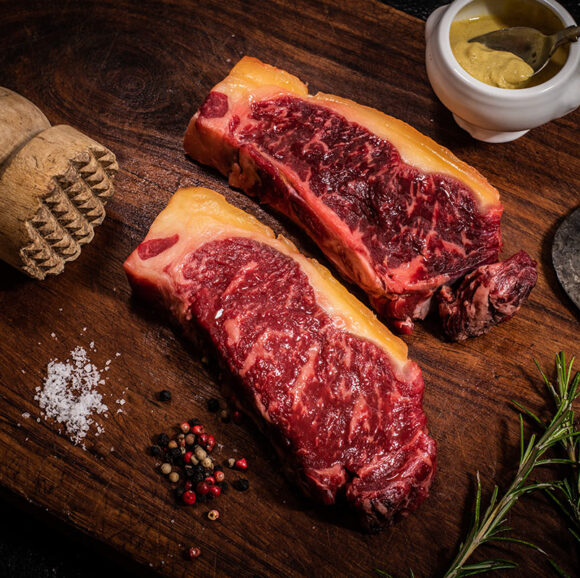
Ribeye Steak (4)
Reputedly one of the most tender and beautifully flavoured of steaks, the Rib eye is one of the most expensive cuts, from the fore rib part of the animal. The muscles here do not work as hard as other areas, and there is rich marbling, which contributes to the distinctive flavour. The name eye refers to the centre part of the meat running through the rib being the best.
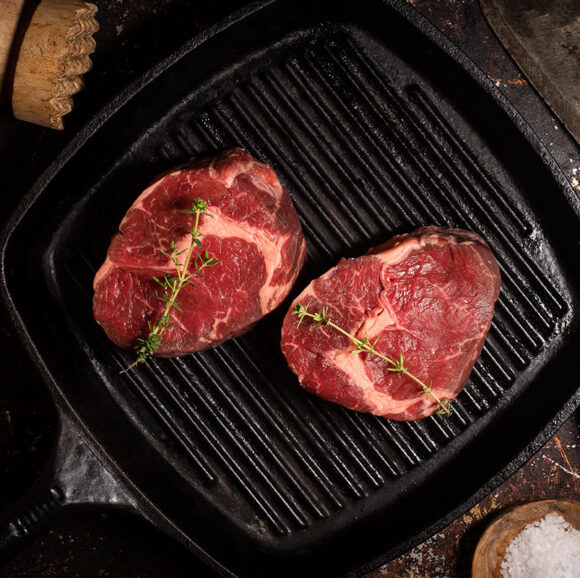
Fillet Steak (5)
The most expensive cut, and understandably so, considering the unctuous decadence and perfect tenderness of the fillet. It is the tenderest of cuts, one which simply melts in your mouth if cooked with care. A very lean cut taken from the smallest end of the tenderloin, it is a muscle which doesn’t work as hard as others, hence the tenderness. However the lean nature means it is low in fat, with no marbling, and as a result it doesn’t have the depth of flavour of cheaper cuts, with tenderness being the clear selling point.
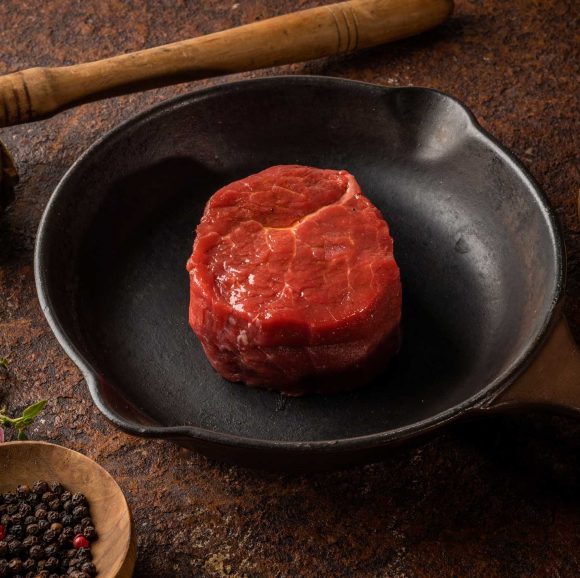
So there you have it, whatever your budget or taste, there is literally a perfect steak for every occasion!
How to cook your perfect steak
Order Meat Online – Free UK Delivery Available
Shop our range of high welfare 100% grass fed meat boxes and free range poultry. Get 10% off your first order with discount code ‘welcome10‘